Dirty. Smart. Choo‑choo.
The Real Story of How Davis Became Davis
Before it was a college town, before the bike lanes, before the farmers market — Davis was just extremely good dirt. And that turns out to be the origin of everything.
Davis, Calif. — Yolo County —
What do you get when a farmers market and the University of California decide to make a city? The answer, it turns out, is Davis — one of the most quietly remarkable small cities in America. But long before anyone was calling it that, before the bike lanes and the agrés and the Saturday morning crowds at Central Park, this particular patch of the Sacramento Valley was doing something much more foundational: it was being extraordinarily good farmland.
The Yolo Basin and Putah Creek floodplains built up deep, nutrient-rich alluvial soil over thousands of years. Flat terrain made plowing easy. A Mediterranean climate offered growing seasons longer than almost anywhere else in the country. And the Bay Area — the market that could move anything — was close enough to matter. It was not glamorous. It was practical. And in California, practical is often how the most remarkable things begin.
And in California, practical is how the remarkable begins.
I. The Railroad Makes It Permanent
After the Gold Rush, many settlers made a quiet but consequential discovery: farming was more reliable than mining. By the late 1800s, this area had joined California’s massive wheat boom. The Central Valley was called the “breadbasket of the world” for a reason — and the land around what would become Davis was at the center of it.
In 1868, the Southern Pacific Railroad ran through the area. A depot was built. The town formed around it and was called Davisville — later shortened, simply, to Davis. The railroad did two critical things: it made large-scale agriculture profitable and it made the area strategically essential to state infrastructure. Without the railroad, Davis probably stays just farmland. With it, Davis became inevitable.
II. Why UC Agriculture Ended Up Here
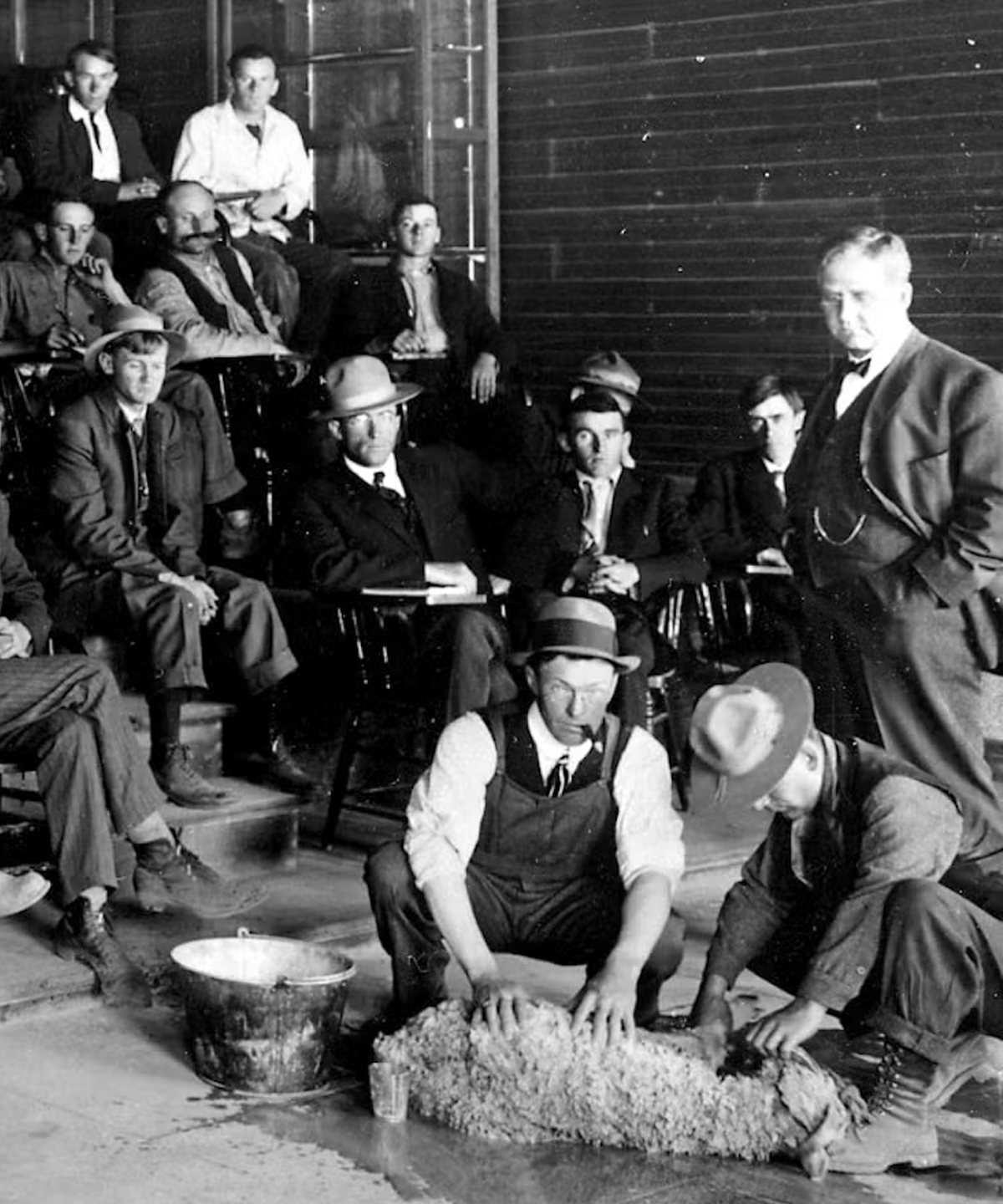
The University of California was founded in Berkeley in 1868 as a land-grant institution. Under the Morrill Act, land-grant universities were required to teach agriculture and the mechanical arts. Problem: Berkeley was not ideal for hands-on farming instruction. You cannot grow almonds in a lecture hall.
So in 1905, the UC Regents purchased 778 acres of farmland near Davis to create the University Farm — a practical training site for agriculture students. The location was chosen for reasons that should sound familiar: it was already agricultural land, it was flat and ideal for experimentation, it was close enough to Berkeley by rail, land was cheap, and there was already a strong regional farming community hungry for applied science. In 1959, it officially became the University of California, Davis.
Once the University Farm opened, something happened that nobody quite planned for: crop science research expanded, irrigation studies grew, and plant breeding programs developed. The university’s cooperative extension programs connected directly with farmers across the state. California agriculture was exploding — citrus, almonds, dairy, grapes as far as the eye could see — and Davis became the working laboratory for all of it.
Part 2: Damn Hippies
It didn’t start as a “cute community thing.” It started as a correction to a broken system. In the late 1970s, farmers were getting squeezed by distributors and grocery chains. Consumers had zero connection to where food came from. UC Davis was pumping out agricultural research at full speed — but locals weren’t directly benefiting.
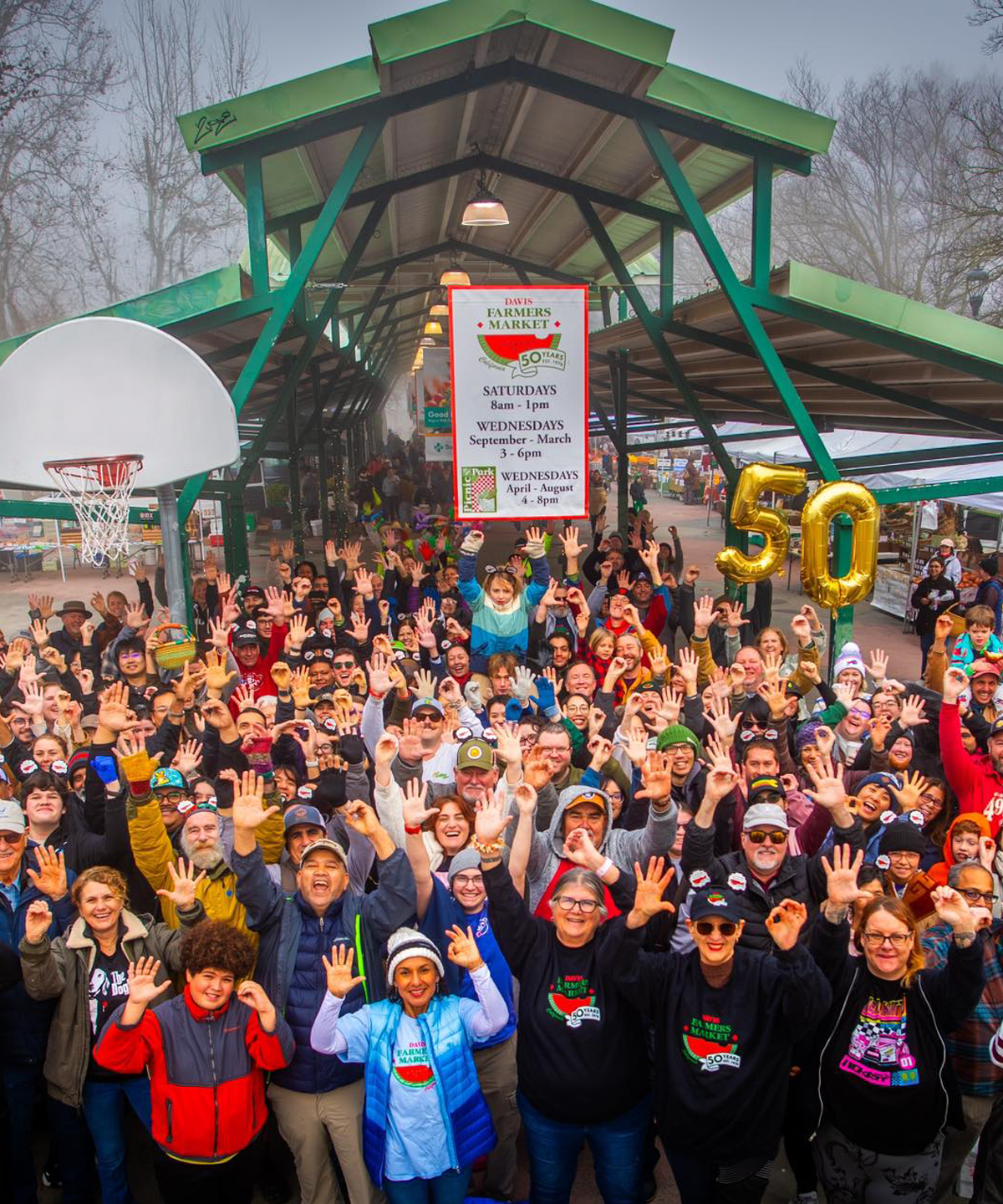
So in 1976, a small group launched the Davis Farmers Market with one simple idea: let farmers sell directly to people. No middleman. That was radical at the time. And Davis was the only place in California with the right combination of ingredients to pull it off.
Part 3: 50 Years Later
In 2026, the Davis Farmers Market celebrates its 50th anniversary. Picture a cool spring day in Central Park, sun warming the Sacramento Valley, a picnic blanket, a chilled bottle of award-winning Chardonnay from Great Bear Vineyard, Viareggio from Zia’s, North African Passion dips with fresh fruit and cheese. The music starts soon. And if the kids are good, it’s YoloBerry for dessert.
This is MyDavis. This is what 50 years of showing up looks like.
The Davis Timeline
| Year | Milestone |
|---|---|
| 1868 | Railroad depot built. Davisville is born. |
| 1905 | UC Regents buy 778 acres for University Farm. |
| 1959 | Officially becomes UC Davis. |
| 1976 | Davis Farmers Market founded. |
| 2026 | Farmers Market 50th Anniversary. |
Most Towns Had Farms OR Educated Consumers. Davis Had Both.
The specific combination that made Davis possible — and that made the Farmers Market possible, and that made UC Davis possible — was not an accident. It was an educated population shaped by university culture, agriculture right outside city limits, a progressive early-adopter community willing to try new things, and a city small enough to test ideas but wealthy enough to support them.
That combination, it turns out, is nearly impossible to replicate. Which is why there is only one Davis.
Want to keep reading? Part 2: What About the Bike Lanes? is coming next. Visit MyDavisCalifornia.com for the full story.