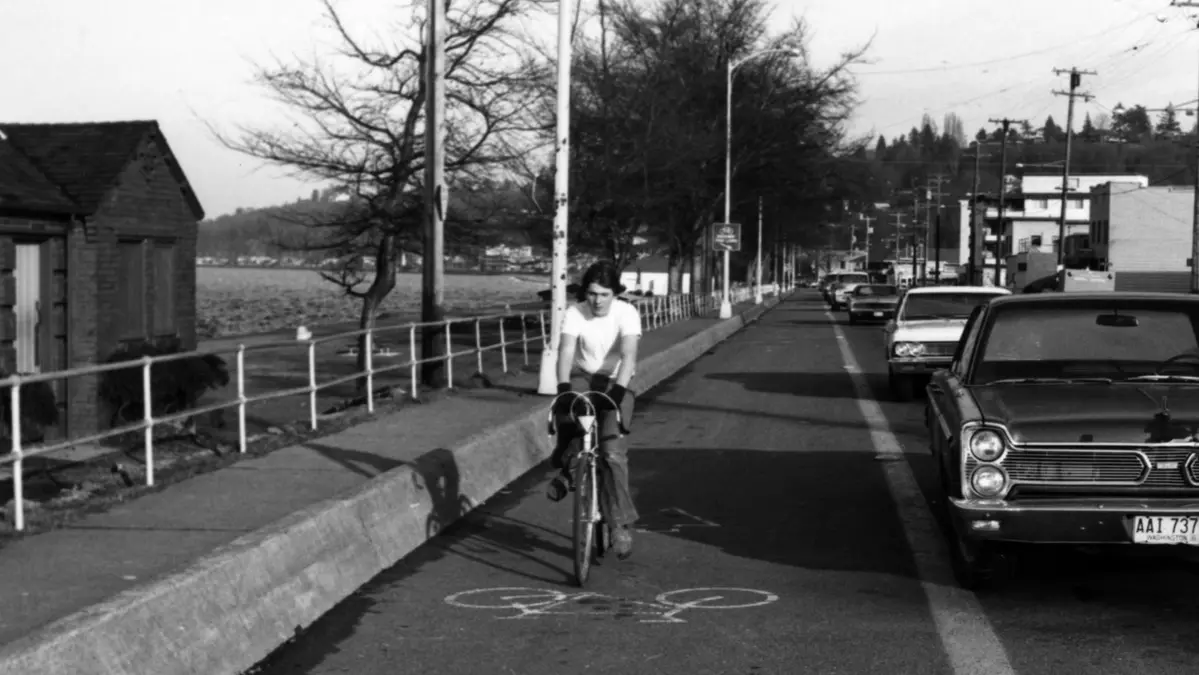
My Davis, California. A flat, sun-drenched university town in California's northern Central Valley — about 11 square miles in size, roughly 67,000 residents, and twelve miles west of Sacramento. In the hierarchy of American cities, we are not particularly large. But in the summer of 1967, something happened on one of our streets that quietly reshaped how cities across the United States — and eventually the world — think about transportation.
The modern bike lane was born here.
The Seed: A Sabbatical in the Netherlands
The origin story of Davis bike lanes begins, somewhat predictably, somewhere else.
In 1963, two Davis families returned from academic sabbaticals in the Netherlands: Donna and Dale Lott, and Frank and Eve Child. What they observed abroad seemed almost radical by American standards. People rode bicycles everywhere — not as recreation, not as novelty, but simply as transportation — on dedicated lanes built directly into city streets.
Returning home, the families formed the Citizens Bicycle Study Group and proposed something unusual for a small California town: a network of bicycle lanes.
City planners rejected the proposal.
So the advocates did what thoughtful residents of university towns often do. They took the idea directly to the voters.
A Campus Already Thinking About Bikes
At roughly the same time, something related was happening across Russell Boulevard.
In the early 1960s, UC Davis was preparing for enormous growth. Enrollment was projected to expand from roughly 2,000 students to nearly 10,000. University leaders quickly recognized the problem: if every student arrived with a car, the quiet agricultural town surrounding the campus would become an automotive experiment gone wrong.
"I have asked our architects to plan for a bicycle-riding, tree-lined campus." — UC Davis Chancellor Emil Mrak, 1961
Incoming students were encouraged to bring bicycles instead of cars, and the university began building car-free bike paths across campus. UC Davis had effectively become a living laboratory for bicycle transportation — and the surrounding city would soon follow.
Long before bike lanes became standard in American cities, Davis was already building a bicycle city — one experiment at a time.
The Political Fight
Back in the city, bicycle advocates were gaining momentum. The Citizens Bicycle Study Group threw their support behind two city council candidates who openly supported bike lanes: Maynard Skinner and Norm Woodbury. Both candidates won their elections with more than 60 percent of the vote.
But a significant obstacle remained.
California law did not yet allow cities to designate portions of a public roadway specifically for bicycles. Councilmember Norm Woodbury, working with city staff and state legislators, helped push through the legislation needed to change that. The result was California Vehicle Code 21207, signed into law by Governor Ronald Reagan.
That law, still on the books today, exists largely because Davis wanted to try something new.
July 1967: History Is Painted on Asphalt
With legal authority secured, Davis moved quickly.
In late July 1967, the City of Davis installed the first modern bike lane in the United States on 8th Street between A Street and Sycamore Lane. For the first time in American history, a lane within a public roadway was officially designated for the preferential use of bicyclists. Additional lanes soon followed on Sycamore Lane, 3rd Street, and J Street.
What seems obvious today required inventing entirely new rules. City engineers had to determine how wide a bike lane should be, where it should sit relative to parked cars, and how cyclists could safely navigate intersections. Through experimentation and collaboration, Davis' Public Works Department developed early design standards that were later adopted by Caltrans and influenced bicycle infrastructure across California and the United States.
At nearly the same moment, UC Davis closed the core of its campus to cars, leaving it primarily to bicycles and pedestrians. City and campus were now moving in the same direction.
Quite literally.
In July 1967, Davis painted a stripe on the street and quietly changed urban transportation.
The Network Expands
Momentum followed quickly. Bike lanes spread along major corridors, and by 1972, routes connected most major roads from Pole Line Road in the east to Sycamore Lane in the west. The city also established formal development standards, ensuring that new neighborhoods would include bicycle infrastructure from the start.
Davis was no longer simply experimenting with bike lanes. It was designing a bicycle city.
Innovation continued on campus. In May 1972, UC Davis experimented with one of the nation's earliest bicycle roundabouts at the intersection of Hutchison Drive and California Avenue. The center circle was initially formed with laid-out fire hose. Cyclists were instructed to ride clockwise until reaching their exit. The design worked — and eventually became a defining feature of the campus landscape.
Recognition: Platinum Status
The cycling world has taken notice. In 2005, the League of American Bicyclists awarded Davis the first-ever Platinum Level Bicycle Friendly Community designation — the highest recognition the organization offers. Davis was the first city in the nation to receive it.
Even our visual identity reflects this heritage. The Davis city logo features a high-wheel bicycle, adopted during the city's 1968 centennial celebration as the symbol that best represented the character of the community.
Home of the U.S. Bicycling Hall of Fame
Given this legacy, it is perhaps fitting that Davis is also home to one of cycling's most important institutions: the United States Bicycling Hall of Fame.
Originally founded in 1986 in Somerville, New Jersey, the Hall of Fame later sought a new permanent home. After a nationwide search, Davis was selected in 2008, in part because of its global reputation as America's premier bicycle community. The museum opened its current facility in Central Park in downtown Davis on April 24, 2010.
The 8,000-square-foot building preserves more than a century of American cycling history, including historic bicycles, racing jerseys and medals, archival photographs, rare publications, and equipment. The collection includes bicycles associated with legends such as Marshall "Major" Taylor and Frank Louis Kramer, along with early designs like the Draisine and Velocipede — artifacts from cycling's earliest era.
As the Hall's president Bob Bowen once noted, you don't have to be a cycling enthusiast to be moved by the collection. It is, at its core, a museum of American ambition, recorded on two wheels.
A Small Town With Global Influence
Today, nearly every major American city includes bicycle infrastructure. Urban planners now discuss bike networks, protected lanes, and bicycle-first street design as standard elements of modern transportation policy. New York City alone operates more than 1,000 miles of bike lanes.
But many of those ideas trace their lineage back to a modest experiment in a small Northern California town.
In July 1967, the City of Davis painted a stripe on a stretch of pavement and declared that bicycles deserved their own space on the street. It was a simple decision. And it quietly reshaped how cities think about the street.
MyDavis, California.
A small city. A university town.
And the place where the modern bike lane was born.